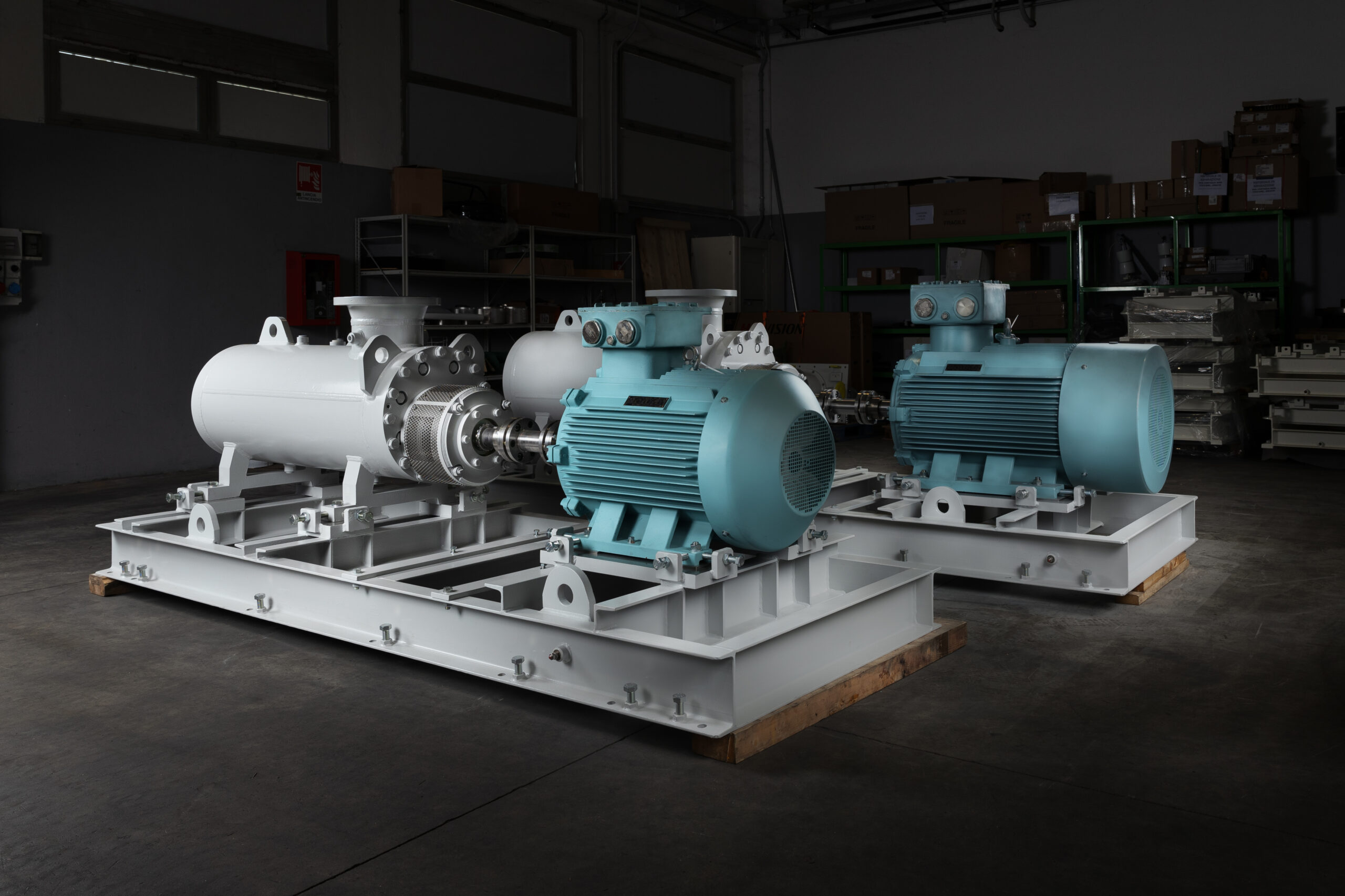
Proper screw pump sizing is not simply a matter of evaluating individual parameters, but of finding the right balance between flow rate, pressure and fluid viscosity.
These three factors are closely interconnected and directly affect volumetric efficiency, energy consumption, component service life and overall system reliability.
For this reason, every pump selection process should begin with a comprehensive assessment of actual operating conditions.
FLOW RATE: THE STARTING POINT FOR PUMP SIZING
Flow rate represents the volume of fluid a pump must transfer per unit of time and is one of the key parameters in pump selection.
In screw pumps, displacement and rotational speed must be carefully selected to deliver the required flow rate while keeping the pump within its recommended operating range. Excessive speeds should be avoided, as they may compromise efficiency and reduce pump service life.

PRESSURE: DETERMINED BY SYSTEM CONDITIONS
By definition, a positive displacement pump generates flow, while the operating pressure is determined by the system’s resistance to fluid movement.
Pressure losses across piping, filters, heat exchangers, valves and other system components determine the differential pressure the pump must operate against.
Proper pump sizing must therefore account not only for nominal operating pressure, but also for actual operating conditions and potential pressure peaks.
VISCOSITY: A CRITICAL PERFORMANCE FACTOR
Among all design parameters, viscosity is one of the most influential factors affecting screw pump performance.
It directly impacts volumetric efficiency, internal leakage, component lubrication and power consumption.
Furthermore, fluid viscosity can vary significantly with temperature. It is therefore essential to consider the actual viscosity under operating conditions, rather than relying solely on values specified at ambient temperature.

FINDING THE RIGHT BALANCE
Flow rate, pressure and viscosity cannot be evaluated independently.
An increase in differential pressure combined with a decrease in viscosity can lead to higher internal leakage and reduced volumetric efficiency.
Conversely, high-viscosity fluids may require lower rotational speeds to limit power consumption, reduce the risk of cavitation and ensure proper pump filling.
Understanding how these parameters interact is essential to identifying the most suitable pump configuration for each application.
THE RIGHT PUMP STARTS WITH THE RIGHT APPLICATION ANALYSIS
Every system operates under specific conditions. Screw pump selection should therefore go beyond nominal flow rate and pressure values to consider the complete application profile, including fluid characteristics, operating conditions, regulatory requirements and installation constraints.
With a comprehensive range of standard screw pumps and the ability to develop customized solutions, SEIM identifies the most suitable pump configuration to ensure reliability, efficiency and operational continuity across the Industrial, Marine, Lift and Oil & Gas sectors.